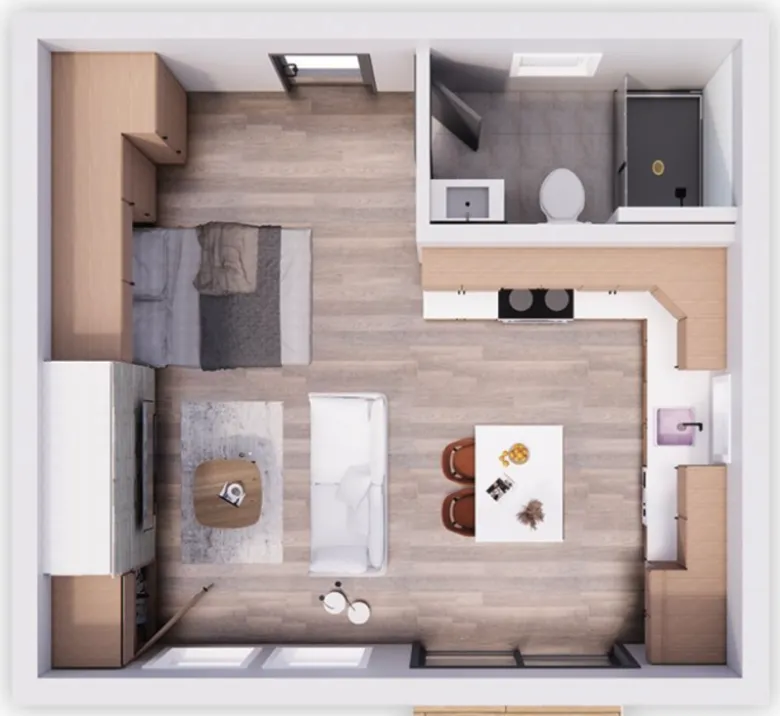
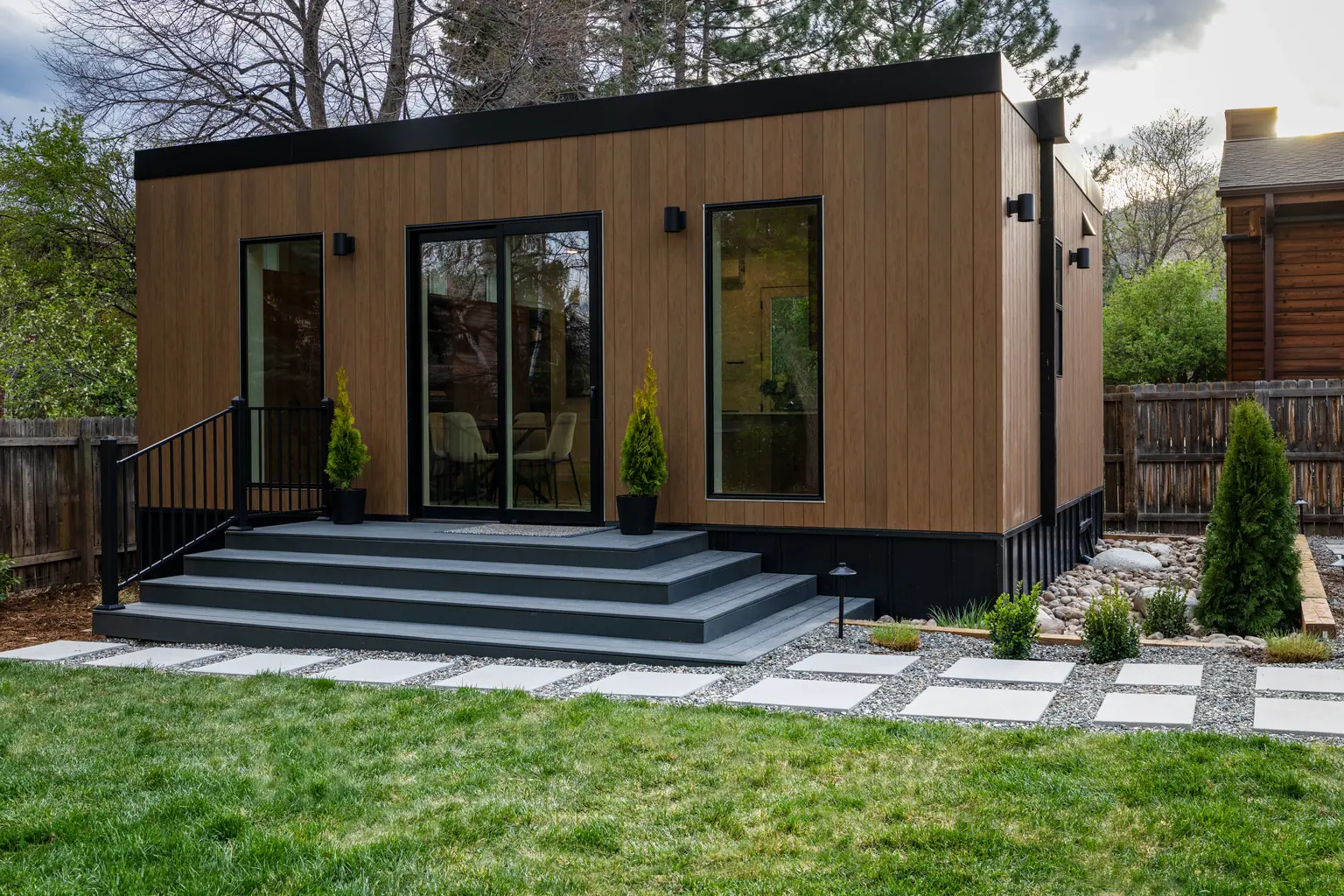
Flex Flat 490
Typical turnkey range
$306,000–$338,200
≈ $2,100–$2,600 / month fully financed · 20–30‑yr routes, July 2026 rates


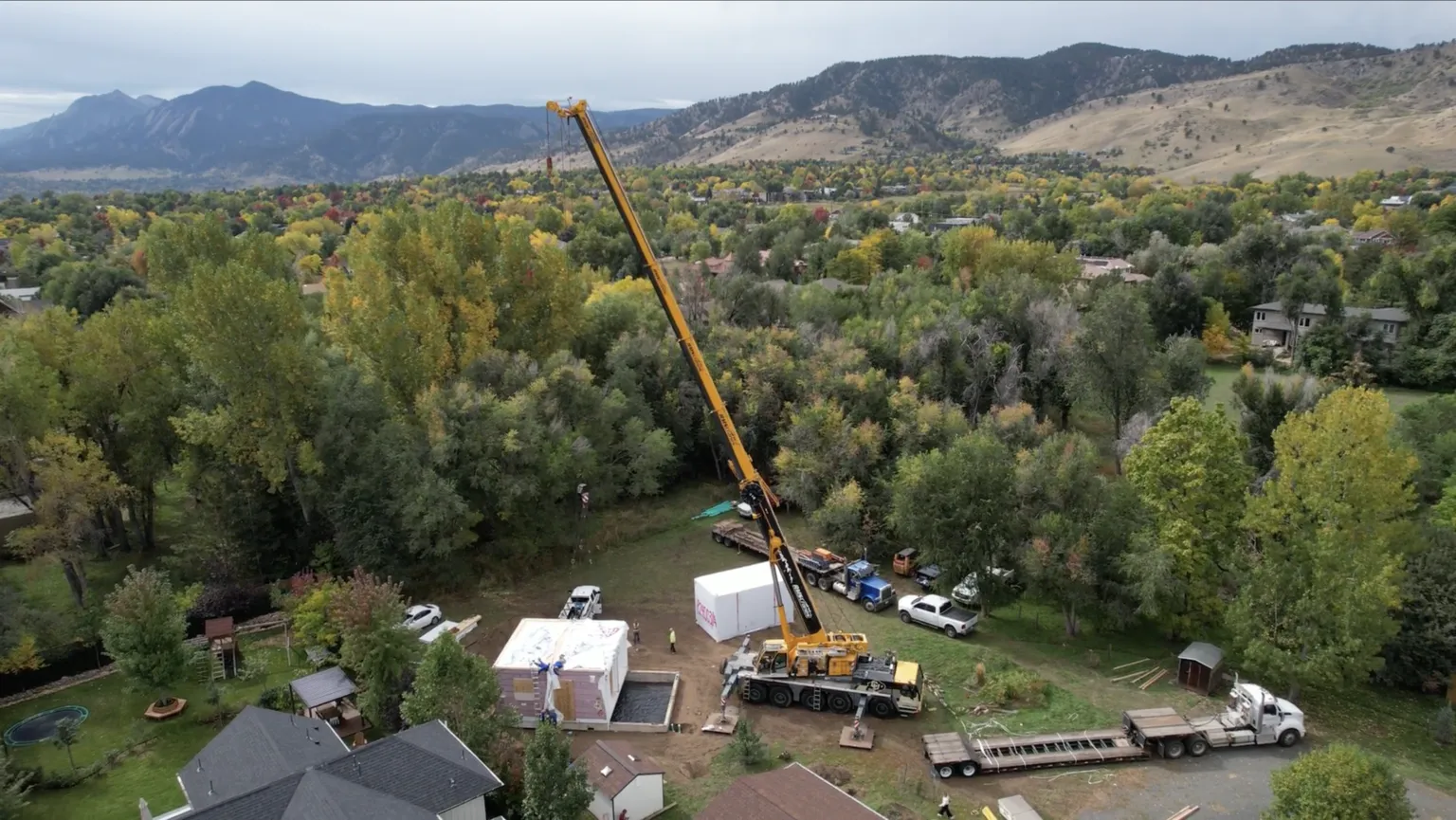
A turnkey Olerra ADU runs $306K–$447K installed — about $2,100–$3,500 a month fully financed. Here's exactly where the money goes, and the five ways homeowners pay for one.
Most ADU pricing quietly leaves out the site work. Ours doesn't: these ranges are turnkey — design, engineering, permits, foundation, the unit itself, craning, installation, and every utility hookup. Both models are steel-frame modular, factory-built to the International Residential Code, and set in one day.
≈ $2,100–$2,600 / month fully financed · 20–30‑yr routes, July 2026 rates
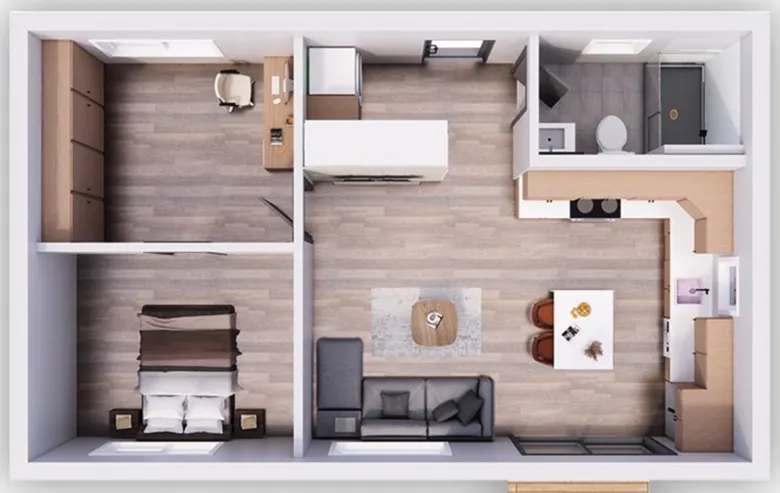
≈ $2,800–$3,500 / month fully financed · 20–30‑yr routes, July 2026 rates
Foundation & soils
Crawlspace vs. helical piers, vault requirements, and what the soils report finds on your lot.
Water & sewer routing
Sharing the main house’s service vs. new taps — in Boulder, sharing avoids ≈$12,700 in plant investment fees.
Your city’s fees
Permit fees, use taxes, and connection charges vary sharply by city and water district — see the city figures below.
Finishes & options
Cladding selection, plus the big optional add‑ons: roof deck, steel stairs, porch.
Most homeowners don’t pay cash — they finance against the equity in their primary home. Here are the same two projects, fully financed at mid‑range turnkey cost, across the routes lenders actually offer.
| Route & rate | 490 · $320,000 | 735 · $425,000 |
|---|---|---|
| HELOC 7.43% during draw — interest-only | $1,981/mo | $2,631/mo |
| HELOC 7.43% after draw — 20-yr amortizing | $2,564/mo | $3,406/mo |
| Home-equity loan 8.20% fixed, 15-yr | $3,095/mo | $4,111/mo |
| Cash-out refi 6.97% 30-yr — ADU portion only | $2,123/mo | $2,819/mo |
| Renovation loan 7.75% 20-yr — ADU portion only | $2,627/mo | $3,489/mo |
| Rate | 15-yr | 20-yr | 30-yr |
|---|---|---|---|
| 6.0% | $844 | $716 | $600 |
| 6.5% | $871 | $746 | $632 |
| 7.0% | $899 | $775 | $665 |
| 7.5% | $927 | $806 | $699 |
| 8.0% | $956 | $836 | $734 |
| 8.5% | $985 | $868 | $769 |
| 9.0% | $1,014 | $900 | $805 |
The per‑$100,000 table is principal & interest per $100,000 financed — scale it to any project size: $350,000 at 7.0% over 30 years ≈ 3.5 × $665 = $2,328/mo. Worked examples are principal & interest only; they exclude taxes, insurance, and closing costs. HELOC rows assume the full balance drawn. Cash‑out and renovation figures show the ADU‑attributable share — both routes also replace and re‑price your existing mortgage balance. Reference: 30‑yr fixed mortgage 6.58% (Freddie Mac PMMS, Jul 23, 2026).
Most ADUs are financed against the equity in the primary home rather than as standalone construction loans. Five routes cover nearly every project — your bank, credit union, or mortgage broker will offer some or all of them.
| Route | Indicative rate | Structure | Borrows against | Notes |
|---|---|---|---|---|
| Cash | — | No debt, no interest, no closing costs | — | The simplest route — weigh it against what the funds could otherwise earn |
| HELOC home-equity line of credit | 7.43% variable · Jul 22, 2026 | Draw as needed for ~10 years (interest-only), then amortizes over ~20 years | Your home’s current value, typically up to 85% including the existing mortgage | Flexible draws match a staged build Payment rises when the draw period ends — and if rates move |
| Home-equity loan | 8.20% fixed · Jul 22, 2026 | Lump sum, fixed payment, typically 10–20 years | Your home’s current value, typically up to 85% | Predictable payment; keeps your existing first mortgage untouched |
| Cash-out refinance | 6.97% fixed 30-yr · Jul 28, 2026 | Replaces your whole mortgage; take equity as cash | Your home’s current value, typically up to 80% | Lowest headline rate of the borrowed routes Re-prices your entire mortgage at today’s rate — usually costs more than it looks if your current rate is lower |
| Renovation loan Fannie Mae HomeStyle / Freddie Mac CHOICERenovation | ≈7.75% fixed · Jul 2026 | Single closing: a standard fixed mortgage from day one (20–30 years); renovation funds escrowed and released by draws during the build | After-renovation value — your home’s appraised value with the ADU, up to ~95% | Often the only route when current equity is thin Like a cash-out, it replaces your existing first mortgage at today’s rate. FHA 203(k) cannot finance a new detached ADU — HomeStyle and CHOICERenovation can |
Indicative rates are national averages for comparison only (Bankrate, Freddie Mac; dates shown) — your quote will differ. Closing costs vary widely by route, from minimal on many HELOCs to 2–5% of the loan on refinance‑style routes — ask for each option’s all‑in cost.
Colorado law (HB24‑1152) requires most metro‑area cities to allow one ADU per single‑family lot as of mid‑2025 — but fees, property taxes, and design rules remain local. Pick where you’re building:
≈ $11,500
typical range $9,000–$14,000 · 2026 fee schedules
ADUs pay a flat $2,170 water system-development charge — not the $10,450 single-family tap fee (Denver Water, Jul 2026).
≈ $530 / yr
per $100,000 of value the ADU adds · 2024–25 levies
If the ADU adds $250,000 of value: ≈ $1,325 a year — about $110/month.
≈ $16,000
typical range $12,000–$25,000 · 2026 fee schedules
Water/wastewater plant investment fees (≈$9,157 + $3,571) apply only with new service connections — $0 when sharing the main house’s: a ≈$12,700 swing. Construction use tax is collected at permit.
≈ $565 / yr
per $100,000 of value the ADU adds · 2024–25 levies
If the ADU adds $250,000 of value: ≈ $1,413 a year — about $118/month.
≈ $14,000
typical range $10,000–$30,000+ · 2026 fee schedules
Your water district decides your fees: city utilities ≈$14K all-in vs. a new tap in the FCLWD special district at $55,685 (Jan 2026 schedule) — check the district before anything else.
≈ $620 / yr
per $100,000 of value the ADU adds · 2024–25 levies
If the ADU adds $250,000 of value: ≈ $1,550 a year — about $129/month.
≈ $5K–$10K
the city’s own published typical ADU fee range · 2026 fee manual
Longmont publishes its own ADU fee range — $5,000–$10,000 covering plan review, permit, use tax, and community investment fees. A new separate water tap would add ≈$12K–$18K in development fees, so whether the ADU shares the house’s service is confirmed with the city case-by-case.
≈ $655 / yr
per $100,000 of value the ADU adds · 2025 levies
If the ADU adds $250,000 of value: ≈ $1,635 a year — about $136/month.
Valuation-based
permit, plan review & use tax scale with project value · 2026 fee schedules
Arvada ADUs must share the main house’s water and sewer service — separate taps are prohibited, so the big new-tap fees other cities charge don’t apply. Development-charge treatment is confirmed during permitting.
≈ $655 / yr
per $100,000 of value the ADU adds · 2025 levies
If the ADU adds $250,000 of value: ≈ $1,635 a year — about $136/month. Newer metro-district areas (Candelas, Leyden Rock) run higher.
Case-by-case
no ADU-specific fee schedule yet · permit fees are valuation-based · 2026
Aurora is still writing its citywide ADU ordinance (in drafting since Jul 2026), and Aurora Water’s 2026 schedule has no ADU category — a full new single-family connection can top $44K, so confirming shared service with the main house is step one. We handle this in feasibility.
≈ $530–$660 / yr
per $100,000 of value the ADU adds · 2025 levies
Depends on your school district: Cherry Creek side ≈$530, Aurora Public Schools side ≈$660. Newer metro-district subdivisions run higher.
≈ $6,000
permit, plan review, trades & use tax on a typical ADU (computed from 2026 schedules) — utility taps additional
Utility tap fees are set case-by-case by Public Works — a full new single-family tap runs $27,385 (2026), so whether the ADU shares the main house’s tap is the swing item. No impact or land-dedication fees on ADUs.
≈ $510–$660 / yr
per $100,000 of value the ADU adds · Adams vs Jefferson County side, 2024–25 levies
Adams County side (Adams 12 schools) ≈$660 · Jefferson County side ≈$510. Metro districts run higher.
$5K–$40K+
planning range — permit fees, use taxes, and utility connections vary sharply by city
The water district is usually the biggest variable — a new tap in some special districts runs $50K+, while sharing the main house’s service can cost almost nothing. We confirm yours during feasibility.
≈ $500–$660 / yr
per $100,000 of value the ADU adds · typical Front Range counties, 2024–25 levies
County mill levies vary — we confirm your county’s exact figure during feasibility.
How the tax estimate works: the assessor adds what the ADU contributes to resale value — often less than the build invoice — and the new value is first assessed the January after completion. Method: added market value × ~6.7% blended residential assessment rate × your total mill levy; figures above use each city’s typical certified 2024–25 tax-area levy (levies re‑set annually, and metro-district subdivisions run higher). City fee figures are 2026 planning estimates from published fee schedules — exact fees are confirmed during permitting, which Olerra manages.
A typical project runs 7–12 months end to end — and payments follow the milestones. Your lender structures draws to match, so funds are released as the work happens.
Step 1 · 1–2 mo
Contract & planning
Pre-permit planning and design approval
Step 2 · 3–7 mo
Permits
Olerra submits & manages the application
Step 3 · 6 wks
Factory build
Site prep & utilities run in parallel
Step 4 · 1 day
Delivery & set
Craned onto the finished foundation
Step 5 · 4–6 wks
Finish & close-out
Hookups, envelope, landscaping, final inspection
Lenders welcome: send questions straight to Sales@olerra.com — we answer lenders directly.
Rent it, house family, or hold it — the free Olerra ADU calculator models rental income, breakeven, property taxes, and every financing route side by side. No email required.
A turnkey detached ADU along the Front Range typically runs $250,000–$450,000 depending on size, site, and finish level. Olerra’s two models land at $306,000–$338,200 for the 490 sq ft Flex Flat 490 and $402,700–$446,500 for the 735 sq ft Flex Flat 735 — turnkey, including design, engineering, permits, foundation, installation, and utility hookups (July 2026 estimates for Boulder-area projects).
Fully financed at mid-range turnkey cost, a Flex Flat 490 runs about $2,100–$2,600 a month and a Flex Flat 735 about $2,800–$3,500 a month across common 20–30-year financing routes at July 2026 rates (principal & interest only). A useful rule of thumb: every $100,000 financed costs about $665/mo at 7.0% over 30 years.
Most homeowners borrow against the equity in their primary home rather than taking a standalone construction loan. The five routes: cash, a HELOC, a fixed home-equity loan, a cash-out refinance, or a renovation loan (Fannie Mae HomeStyle / Freddie Mac CHOICERenovation). Renovation loans qualify against your home’s after-renovation value — often the only route when current equity is thin. Note that FHA 203(k) cannot finance a new detached ADU, while HomeStyle and CHOICERenovation can.
In Denver, Boulder, and Fort Collins, expect roughly $530–$620 a year for every $100,000 of value the ADU adds (2024–25 mill levies). The assessor adds what the ADU contributes to resale value — often less than the build invoice — and the new value is first assessed the January after completion.
Yes — mainly in permit fees and utility connections. Typical city fees run ≈$11,500 in Denver, ≈$16,000 in Boulder (sharing the main house’s water/sewer service avoids ≈$12,700 in plant investment fees), and ≈$14,000 in Fort Collins — though a new water tap in Fort Collins’ FCLWD special district costs $55,685, so check your water district first.
A typical Olerra project runs 7–12 months end to end: roughly 1–2 months of contract and planning, 3–7 months of permitting (jurisdiction-dependent), a 6-week factory build (site prep runs in parallel), a one-day crane set, and 4–6 weeks of finish work. Payments follow these milestones — you don’t need the full amount on day one.
Colorado law (HB24-1152) requires most metro-area cities to allow one ADU per single-family lot as of mid-2025, but size limits, design rules, and fees remain local. Our free property check confirms what applies to your specific address.
All figures on this page are planning estimates, not quotes, appraisals, or offers. Indicative rates are national averages as of the dates shown (Bankrate, Jul 22–28, 2026; Freddie Mac PMMS, Jul 23, 2026) and change frequently — obtain current quotes from your lender. Olerra Living Innovations is not a lender, mortgage broker, or financial advisor; nothing here is financial, tax, or legal advice.
City fees, taxes, and rules are set by local jurisdictions and confirmed during feasibility and permitting. Property-tax method: added market value × ~6.7% blended residential assessment rate × your county’s total mill levy (2024–25 certified levies, re-set annually). Your Olerra Sales Estimate governs project-specific pricing. Data last updated July–August 2026.
Built for your location and what you want to do.
We'll be in touch before then — a confirmation is on its way to your email.