Because it’s a complete home — labor and materials, plus the site work and city fees that come with any new building. Here’s where the money goes, and why the factory route costs 40–50% less.
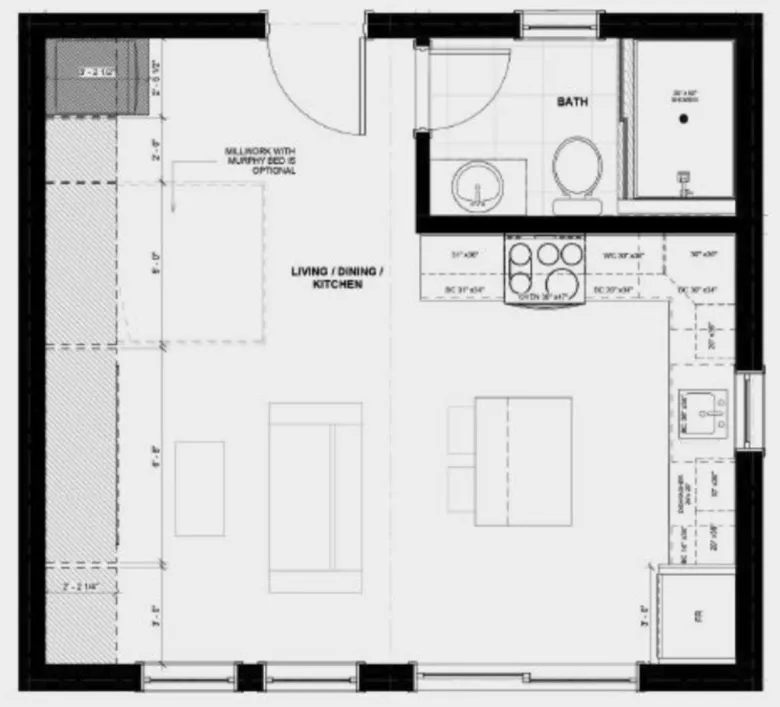
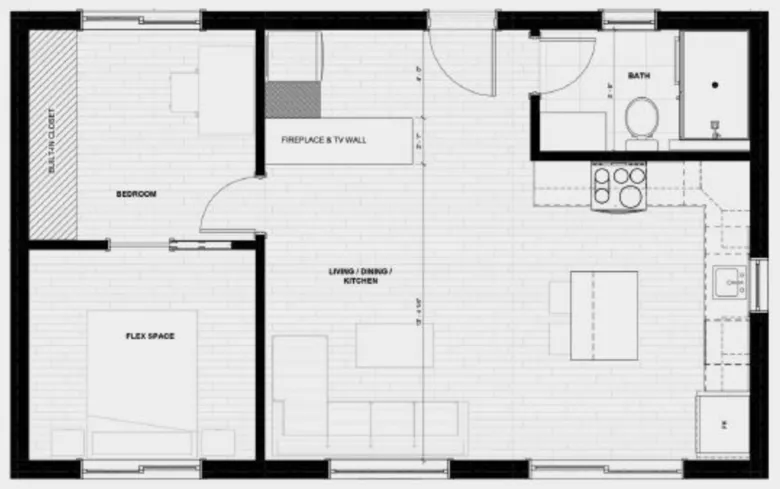
An Olerra ADU carries every system a full house does — kitchen, bathroom, HVAC, laundry, its own electrical panel — in 490–735 square feet. Building the unit is 60–70% of the budget; site work, utilities, permits, and design are the rest.
| Where it goes | Share of budget | Typical range |
|---|---|---|
| Building the unit Labor & materials — structure, kitchen, bath, HVAC, finishes | 60–70% | $170,000–$230,000 |
| Site work & foundation Excavation, foundation, grading, craning & set | ≈10% | $20,000–$40,000 |
| Design & engineering Architectural drawings, structural & soils engineering | 6–10% | $15,000–$30,000 |
| Utility connections Water, sewer, electric — trenching and hookups | ≈5–9% | $10,000–$30,000 |
| Permits & city fees Varies sharply by city — see your city below | ≈2–8% | $5,000–$26,000 |
Typical ≈500 sq ft detached ADU along the Front Range, 2026 — the same published reference data behind the free Olerra ADU calculator.
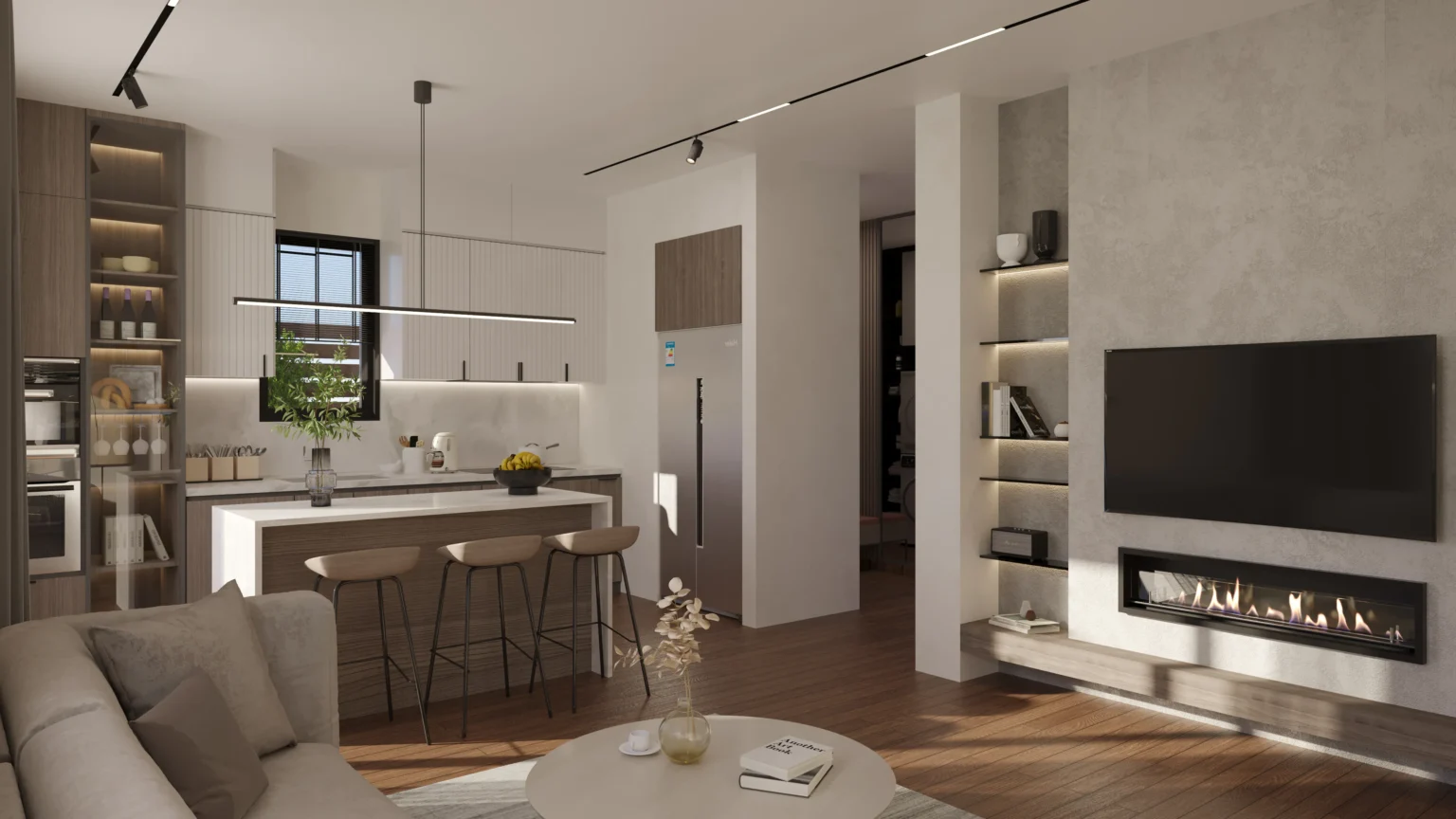
One-off site-built, under ≈750 sq ft
$600–$1,000+
per finished sq ft, all-in — typical for one-off custom builds in Denver/Boulder
Olerra, turnkey
≈$550–$690
per sq ft with everything included — design, permits, foundation, the unit, installation, and hookups
Every line of the budget changes when the build moves from your backyard to a factory line.
| Site-built with a general contractor | The Olerra factory route | |
|---|---|---|
| Design & engineering | Custom drawings and engineering, bought once and used once — $15,000–$30,000 before ground breaks | Engineered once, refined across every build — the cost is spread over the whole production run, and it’s included |
| Labor | Every trade drives to your lot and works at Front Range site rates, scheduled one after another Labor is the single biggest line on a site-built budget | ≈90% of the labor hours happen on our factory line, where skilled-trade labor costs a fraction of Front Range site rates |
| Materials | Bought per-project at retail quantities; 10–15% waste is normal on one-off builds | Bought in bulk for a repeating build; factory cut-lists leave near-zero waste |
| Markups | Each subcontractor prices in margin, then the GC adds 20–35% on top of everything | One vertically-integrated company — design, factory, and installation under a single fixed-cost contract |
| Weather & schedule | Months of framing and finishing exposed to Front Range hail, snow, and wind — delays cost money | Built indoors in ≈6 weeks while site prep runs in parallel; arrives ≈90% complete and is set in one day |
| Timeline | 12–18 months is typical | 7–12 months end to end |
| Bottom line · ≈490 sq ft, turnkey | ≈$500,000–$650,000 | $306,000–$338,200 |
Same code, same permanence: steel-frame, built to the International Residential Code — the same code your city applies to site-built homes. GC figures: typical published Front Range ranges for a comparable one-off ≈490 sq ft build (2025–26). Olerra: July 2026 Boulder-area turnkey estimates for the Flex Flat 490.
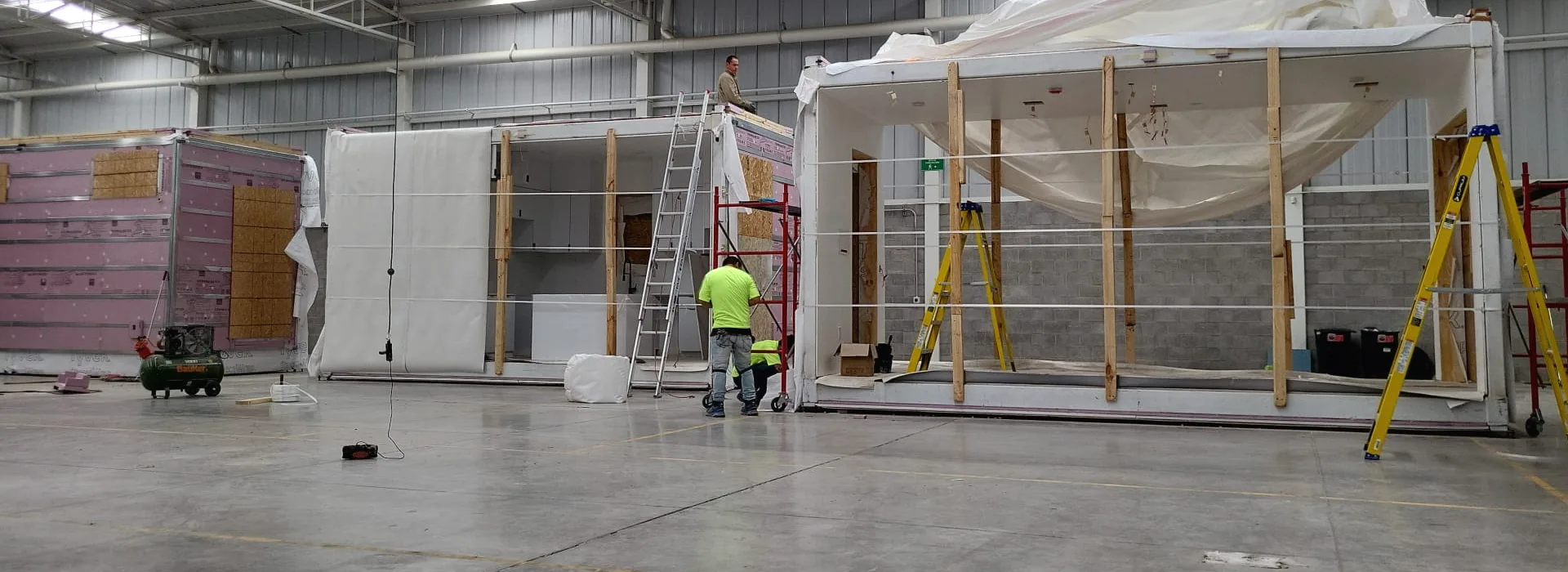
Permits, taps, and connection charges are set by your city, not your builder — pick yours:
≈ $11,500
typical range $9,000–$14,000 · 2026 fee schedules
ADUs pay a flat $2,170 water system-development charge — not the $10,450 single-family tap fee (Denver Water, Jul 2026).
≈ $530 / yr
per $100,000 of value the ADU adds · 2024–25 levies
If the ADU adds $250,000 of value: ≈ $1,325 a year — about $110/month.
≈ $16,000
typical range $12,000–$25,000 · 2026 fee schedules
Water/wastewater plant investment fees (≈$9,157 + $3,571) apply only with new service connections — $0 when sharing the main house’s: a ≈$12,700 swing. Construction use tax is collected at permit.
≈ $565 / yr
per $100,000 of value the ADU adds · 2024–25 levies
If the ADU adds $250,000 of value: ≈ $1,413 a year — about $118/month.
≈ $14,000
typical range $10,000–$30,000+ · 2026 fee schedules
Your water district decides your fees: city utilities ≈$14K all-in vs. a new tap in the FCLWD special district at $55,685 (Jan 2026 schedule) — check the district before anything else.
≈ $620 / yr
per $100,000 of value the ADU adds · 2024–25 levies
If the ADU adds $250,000 of value: ≈ $1,550 a year — about $129/month.
≈ $5K–$10K
the city’s own published typical ADU fee range · 2026 fee manual
Longmont publishes its own ADU fee range — covering plan review, permit, use tax, and community investment fees. A new separate water tap would add ≈$12K–$18K, so whether the ADU shares the house’s service is confirmed with the city case-by-case.
≈ $655 / yr
per $100,000 of value the ADU adds · 2025 levies
If the ADU adds $250,000 of value: ≈ $1,635 a year — about $136/month.
Valuation-based
permit, plan review & use tax scale with project value · 2026 fee schedules
Arvada ADUs must share the main house’s water and sewer service — separate taps are prohibited, so the big new-tap fees other cities charge don’t apply. Development-charge treatment is confirmed during permitting.
≈ $655 / yr
per $100,000 of value the ADU adds · 2025 levies
If the ADU adds $250,000 of value: ≈ $1,635 a year — about $136/month. Newer metro-district areas (Candelas, Leyden Rock) run higher.
Case-by-case
no ADU-specific fee schedule yet · permit fees are valuation-based · 2026
Aurora is still writing its citywide ADU ordinance (in drafting since Jul 2026), and Aurora Water’s 2026 schedule has no ADU category — a full new single-family connection can top $44K, so confirming shared service with the main house is step one. We handle this in feasibility.
≈ $530–$660 / yr
per $100,000 of value the ADU adds · 2025 levies
Depends on your school district: Cherry Creek side ≈$530, Aurora Public Schools side ≈$660. Newer metro-district subdivisions run higher.
≈ $6,000
permit, plan review, trades & use tax on a typical ADU (computed from 2026 schedules) — utility taps additional
Utility tap fees are set case-by-case by Public Works — a full new single-family tap runs $27,385 (2026), so whether the ADU shares the main house’s tap is the swing item. No impact or land-dedication fees on ADUs.
≈ $510–$660 / yr
per $100,000 of value the ADU adds · Adams vs Jefferson County side, 2024–25 levies
Adams County side (Adams 12 schools) ≈$660 · Jefferson County side ≈$510. Metro districts run higher.
$5K–$40K+
planning range — permit fees, use taxes, and utility connections vary sharply by city
The water district is usually the biggest variable — a new tap in some special districts runs $50K+, while sharing the main house’s service can cost almost nothing. We confirm yours during feasibility.
≈ $500–$660 / yr
per $100,000 of value the ADU adds · typical Front Range counties, 2024–25 levies
County mill levies vary — we confirm your county’s exact figure during feasibility.
Turnkey — design, permits, foundation, the unit, installation, and utility hookups included. Most homeowners finance against home equity and pay monthly.
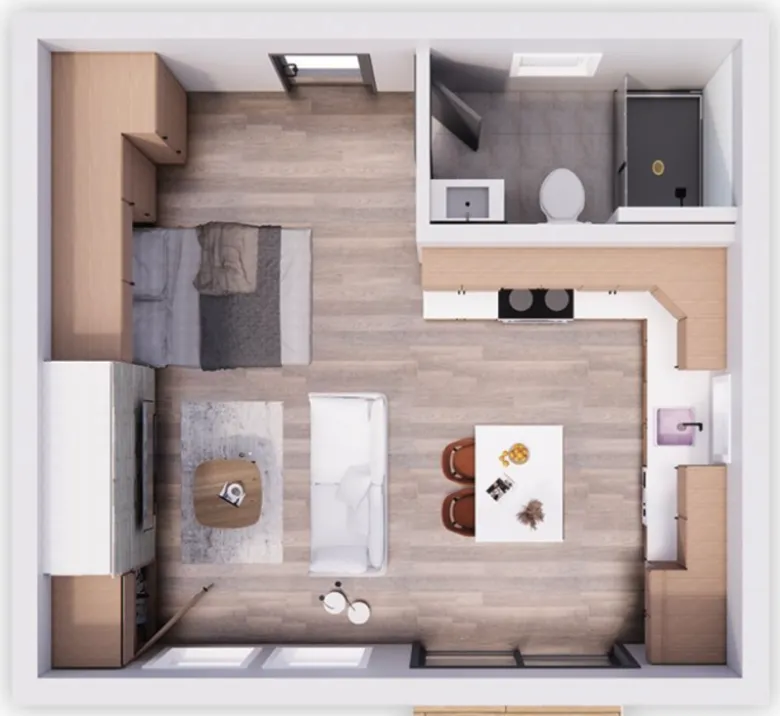
≈ $2,100–$2,600 / month fully financed
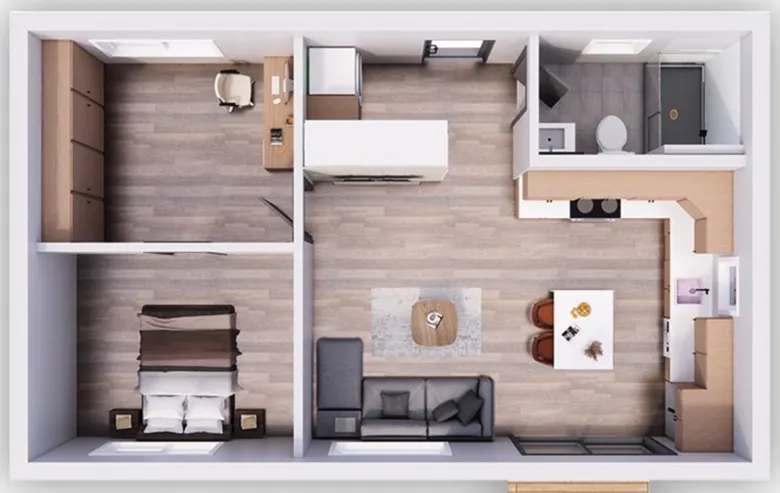
≈ $2,800–$3,500 / month fully financed
Because an ADU is a complete, code-built home — full kitchen, full bathroom, HVAC, plumbing, electrical, laundry — plus a real construction project: site work, foundation, utility connections, permits, and design. Labor and materials for the unit itself take roughly 60–70% of a turnkey budget; the ground it stands on and the paperwork that legalizes it take the rest. And because the expensive parts don’t shrink with square footage, small buildings always look pricey per square foot.
Fixed costs — design, permits, foundation, utility connections, crew mobilization — are roughly the same at 490 sq ft as at 2,500 sq ft, so a small building has fewer square feet to spread them over. Kitchens and bathrooms, the costliest rooms in any home, also make up most of a small floor plan. That’s why one-off site-built projects under ≈750 sq ft commonly land at $600–$1,000+ per finished square foot all-in in Denver/Boulder, while large new homes run ≈$350–$500.
Usually not. A one-off site build means custom design bought once, every trade working at Front Range site rates in sequence, retail materials, weather delays, and 20–35% general-contractor markup stacked on subcontractor margins — a comparable ≈490 sq ft detached ADU typically lands around $500,000–$650,000 turnkey. Olerra’s factory-built 490 runs $306,000–$338,200 turnkey — typically 40–50% less than a traditional build.
Five reasons: labor (≈90% of the hours happen on a production line, where skilled-trade labor costs a fraction of Front Range site rates), materials (bought in bulk with near-zero waste), engineering (designed once, refined across every build), weather (built indoors in ≈6 weeks, set in one day), and one contract (vertically integrated — no stacked markups). The result is built to the same International Residential Code your city applies to site-built homes, on a steel frame rated for 165 mph winds.
Permits, taps, and connection charges are set by your city and water district, and your soils report says what your foundation needs — the same whoever builds. But routing matters: sharing the main house’s water service instead of a new tap saves ≈$12,700 in Boulder and $20,000–$50,000+ in some districts. Our free property check flags what applies to your address before you spend anything.
It’s a self-contained rentable home on land you already own. Fully financed, a Flex Flat 490 runs about $2,100–$2,600 a month, while Front Range one- and two-bedroom rents commonly run $1,700–$2,100+ (HUD FY2026 fair-market rents) — and the unit adds appraised value to the property. The free ADU calculator models rent, breakeven, taxes, and every financing route for your specific address.
All figures on this page are planning estimates, not quotes, appraisals, or offers. Cost-breakdown shares and ranges reflect a typical ≈500 sq ft detached Front Range ADU (2026 published reference data). The general-contractor comparison reflects typical published Front Range market ranges for one-off site-built detached ADUs of comparable size and finish (2025–26); individual quotes vary widely. Olerra turnkey ranges are July 2026 estimates for typical Boulder-area projects; your property gets its own itemized Sales Estimate, which governs project-specific pricing.
City fees, taxes, and rules are set by local jurisdictions and confirmed during feasibility and permitting. Property-tax method: added market value × ~6.7% blended residential assessment rate × your county’s total mill levy (2024–25 certified levies, re-set annually). Olerra Living Innovations is not a lender or financial advisor; nothing here is financial, tax, or legal advice. Data last updated July–August 2026.
Built for your location and what you want to do.
We'll be in touch before then — a confirmation is on its way to your email.
Thanks — we’ll reply to your email, usually the same day.
Our team is already on it — here’s what happens next.