Short answer: an ADU (accessory dwelling unit) is a second, self-contained home on your lot, with its own place to cook, sleep and bathe. A home addition makes the house you already live in bigger. Choose an ADU if the space is for another household or for rental income. Choose an addition if it’s for your own household: another bedroom, a primary suite, or room for a parent who lives with you.
Both add living space without moving, and both can be built in a factory instead of framed in your yard. Here is how they differ in Colorado.
Home addition vs. ADU at a glance
| Feature | Home addition | ADU |
|---|---|---|
| What you get | More rooms in your existing home | A second, self-contained home on the lot |
| Kitchen | Shares the house’s kitchen | Its own kitchen and bathroom, and usually its own entrance |
| Who it’s for | Your own household | A parent, adult child, guest or tenant living separately |
| Rules that apply | Your zone’s rules for the main house: setbacks, lot coverage, height | Your city’s ADU rules: size, height, setbacks, short-term-rental rules |
| Rental income | Not a separate home, so it can’t be rented as one | Can be rented long term |
| Privacy | Shared walls and a shared front door | Its own front door, often a separate building |
What makes space an ADU instead of an addition
Colorado law defines an ADU as a unit with complete, independent living facilities: somewhere to live, sleep, cook and use the bathroom. It can be detached, attached to the house, or inside it. Many cities also look at whether it has its own entrance. Space that relies on the main house’s kitchen is part of the house, which makes it an addition. If you’re planning an in-law suite with a kitchenette, check how your city classifies it before you design it.
How Colorado rules treat each one
Since June 30, 2025, HB24-1152 has required cities and towns of 1,000 or more people inside one of Colorado’s metropolitan planning areas, which covers most of the Front Range, to allow an ADU wherever they allow a single-family home, with administrative approval. Within limits the law sets, cities still apply their own standards for size, height and setbacks, and their own short-term-rental rules. Our Colorado ADU rules by city pages quote each city’s code.
An addition is part of the main house. It follows your zone’s rules for the house itself, such as setbacks, lot coverage and height, and needs a building permit like any other construction.
Cost, financing and property tax
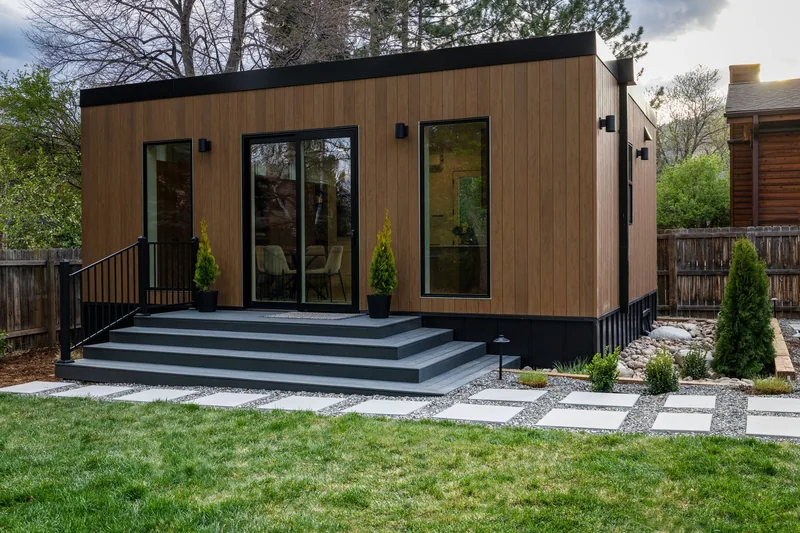
Costs for either depend on size, finishes, the site and how the new space connects to what’s there. An ADU usually needs more of its own infrastructure: a kitchen, a full bathroom and, in many cities, its own utility connections and fees. An addition ties into the house’s existing systems, although the electrical service, water heater or heating may need an upgrade. For an ADU, Olerra’s Flex Flat 490 typically runs $300,000 to $365,000 all-in and the 735 runs $420,000 to $465,000, with site preparation, foundation, utility connections and permitting included. The ADU cost calculator shows what an ADU could cost and earn on your property.
Both are usually paid for the same ways: cash, a home equity line or loan, a renovation or construction loan, or a cash-out refinance. A home equity line or loan keeps your current mortgage in place; a cash-out refinance replaces it. Either project usually raises your home’s value for tax purposes, and with it your property tax.
Which one fits your plans?
An addition is usually the better fit if:
- your family needs another bedroom, a playroom or an office;
- you want a main-floor primary suite so you can stay in the house long term;
- a parent is moving in and will share meals and daily life with you;
- you don’t plan to rent the space as a separate home.
An ADU is usually the better fit if:
- you want rental income now or later;
- a parent or adult child wants their own front door and kitchen;
- you want space that can change use over the years, from guest house to rental to a home for you as you downsize;
- there’s room at the back of the lot, but little room to build onto the house.
Factory-built additions and ADUs
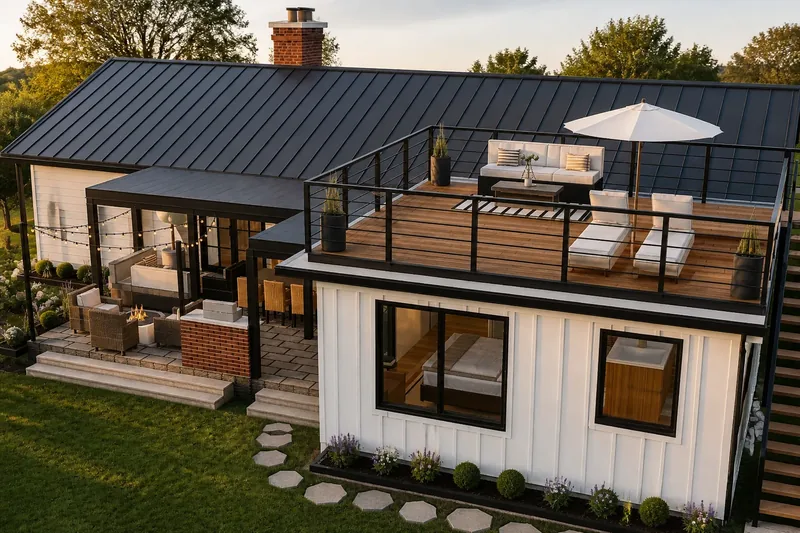
Both can be built in a factory. A factory-built ADU is set on its own foundation in your yard; a factory-built addition is joined to the house. Either way, most of the building happens indoors, away from Colorado weather, and less of the work happens at your house. Olerra offers both backyard ADUs and factory-built home additions. For the steps, permits and options, see how to plan a home addition in Colorado.
Frequently asked questions
Is an in-law suite an ADU or an addition?
It depends on what’s inside. An in-law suite with its own kitchen, bathroom and sleeping space is usually an attached ADU. A bedroom and bath that share the main kitchen is an addition.
Can I rent out a home addition?
Not as a separate home, because an addition is part of your house. You may be able to rent a room to a housemate under your city’s occupancy rules. If you want a unit you can rent to a separate household, you’re looking at an ADU.
Does HB24-1152 apply to home additions?
No. HB24-1152 is about ADUs. An addition follows your zone’s rules for the main house and the normal building permit process.
Can I build both an addition and an ADU?
Sometimes. An addition makes the house bigger and an ADU adds a second home, so whether both fit depends on your lot size and your zone’s lot coverage and setback rules.
Not sure which fits your lot?
The answer depends on your house, your lot and your city’s rules. Start with a free property check.