How to Choose an ADU Contractor in Colorado (Questions to Ask)
How to hire an ADU contractor in Colorado, the questions to ask, the red flags to avoid, how licensing works here, and modular versus site-built compared.


Pueblo’s real rules, taxes and rents — read from the codified ordinance, every figure sourced and dated. Here: a HUD benchmark rent of $967/mo for a 1-bed. Run your own numbers below, free.
Read from the Pueblo Code Of Ordinances itself — the operative legal text, not a website summary. Pueblo is an HB24-1152 subject jurisdiction: since June 30, 2025, state law requires it to allow an ADU wherever it allows a single-family home, with administrative approval — the local standards below still apply.
| Maximum ADU size | 800 sq ft or the main home's gross floor area, whichever is lessverified October 2026Pueblo Code Of Ordinances §17-4-16the ordinance textThe gross floor area of the accessory dwelling unit shall not exceed one hundred percent (100%) of the gross floor area of the one-family residence on the same lot or eight hundred (800) square feet, whichever is less. |
| Height limit | Attached ADU: the zone district's maximum building height. Detached ADU: may not exceed the height of the main one-family home on the same lot.verified October 2026Pueblo Code Of Ordinances §17-4-16the ordinance textHeight. a. Attached accessory dwelling units shall comply with the maximum building height of the zone district. b. Detached accessory dwelling units shall not exceed the height of the one-family residence on the same lot. |
| Owner occupancy | Yes, but only at time of application: owner must demonstrate occupancy of the lot when applying to build or convert an ADU (e.g., utility bill, mail, or bank statement dated within 12 months); no ongoing occupancy requirement thereafter.verified September 2026Pueblo Code Of Ordinances §17-4-16the ordinance textThe owner of a lot must demonstrate occupancy of the lot when an application is submitted to construct a new accessory dwelling unit on a lot that already contains a one-family residence or to convert part of an existing one-family residence into an accessory dwelling unit. Proof of occupancy may include, but not be limited to, a computer-generated utility or medical bill, first-class mail, or bank statement that includes the subject property address and is dated within 12 months of applying to construct or convert an accessory dwelling unit. |
| Extra parking | One new off-street space only if all three apply: no usable existing off-street space, the zone required parking for the main home as of Jan 1, 2024, and on-street parking is banned on the block. Otherwise, if the lot has an existing off-street space not designated for the main home, one must be designated for the ADUverified October 2026Pueblo Code Of Ordinances §17-4-16the ordinance text(10) Parking. One (1) off-street parking space shall be provided in connection with the construction or conversion of an accessory dwelling unit if all three conditions are met: a. The lot does not have an existing off-street parking space that could be used for the accessory dwelling unit, including an existing driveway, garage, or tandem parking space; b. The lot is in a zone district that, as of January 1, 2024, requires one or more parking spaces for the one-family residence; and c. The lot is located on a block where on-street parking is prohibited. (11) If the three conditions listed under subsection c. are not met, but the accessory dwelling unit is located on a lot containing an existing driveway, garage, tandem parking space, or other off-street parking space at the time of construction or conversion of the accessory dwelling unit that is not designated for use by the one-family residence, one such parking space shall be designated for use by the accessory dwelling unit. |
| Setbacks | Rear: 5 ft (detached ADUs 16 ft or lower in height only); attached ADUs and detached ADUs over 16 ft must meet the zone district's minimum rear-yard setback. Front and side setbacks follow zone district minimums for all ADUs.verified September 2026Pueblo Code Of Ordinances §17-4-16the ordinance textDetached accessory dwelling units sixteen (16) feet or lower in height may be placed as close as five (5) feet to the rear property line. A detached accessory dwelling unit higher than sixteen (16) feet shall comply with the minimum rear-yard setback requirements of the zone district. Attached accessory dwelling units shall comply with the minimum rear-yard setback requirements of the zone district. All accessory dwelling units shall comply with the minimum front-yard and side-yard setback requirements of the zone district. |
Source: Pueblo Code Of Ordinances, §17-4-16 · ordinance text retrieved 2026-08-25, re-verified October 2026 · open “the ordinance text” under any figure to read the exact sentence it comes from.
Pueblo’s size cap is conditional rather than a single number: 800 sq ft or the main home's gross floor area, whichever is less — worth reading closely before sizing a unit.
Owner occupancy: Yes, but only at time of application: owner must demonstrate occupancy of the lot when applying to build or convert an ADU (e.g., utility bill, mail, or bank statement dated within 12 months); no ongoing occupancy requirement thereafter.
Parking: One new off-street space only if all three apply: no usable existing off-street space, the zone required parking for the main home as of Jan 1, 2024, and on-street parking is banned on the block. Otherwise, if the lot has an existing off-street space not designated for the main home, one must be designated for the ADU.
What an ADU adds to the tax bill in Pueblo, and the federal benchmark for what it rents for.
Levies: Pueblo County Assessor - 2025 Tax Groups (mill levy by tax district) — example: Pueblo County tax group 60B; levies differ between tax areas inside Pueblo; check your parcel with the county assessor. Rates: Colorado DOLA, TY2026 — the 10% reduction on the first $700,000 of value applies to the local-government portion, once per property. Rents: HUD Fair Market Rents, huduser.gov.
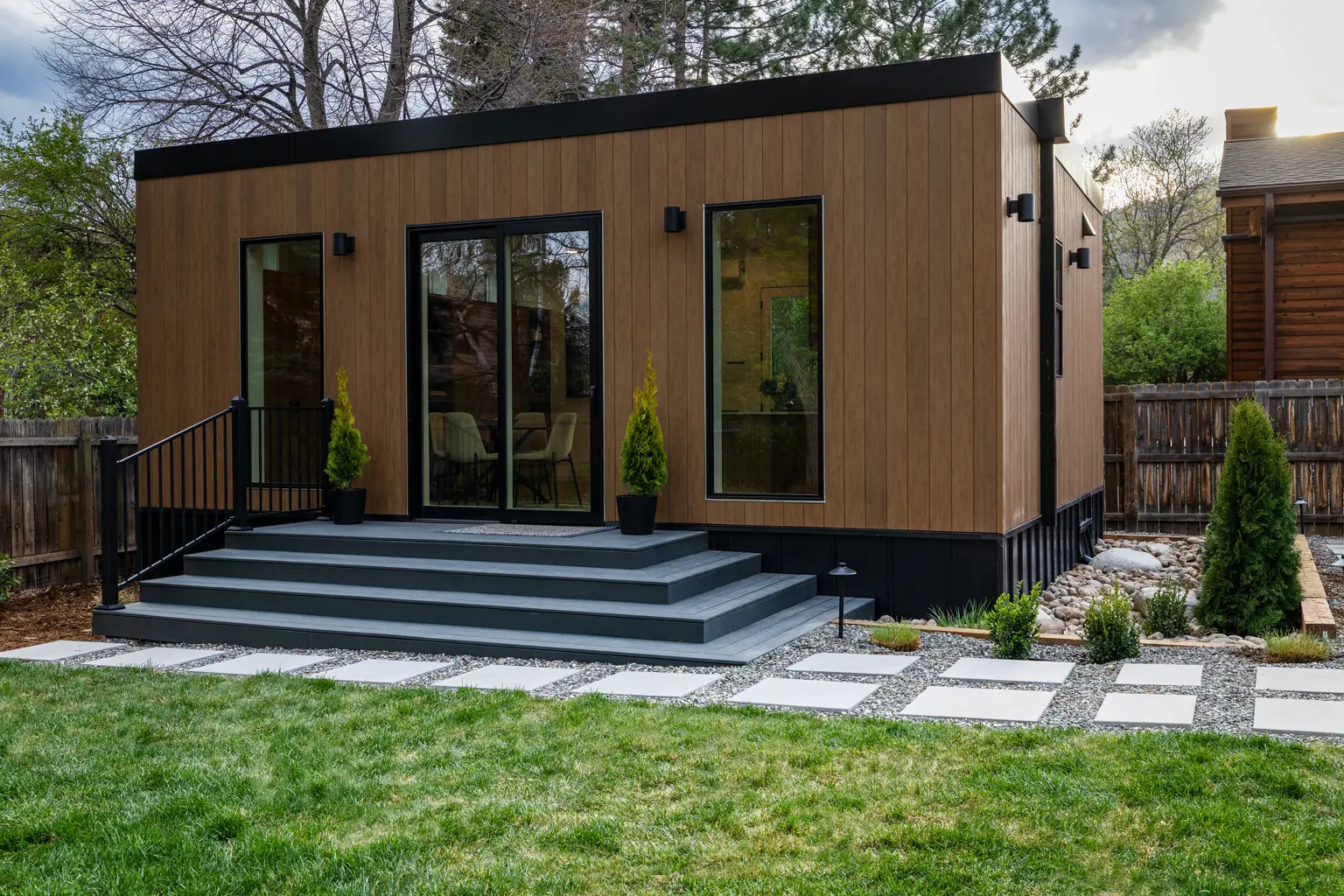
Two ways to build the same unit in Pueblo. Both figures are all-in — design, permits, foundation, utility connections and installation.
Published Front Range ranges for a comparable one-off build, 2025–26
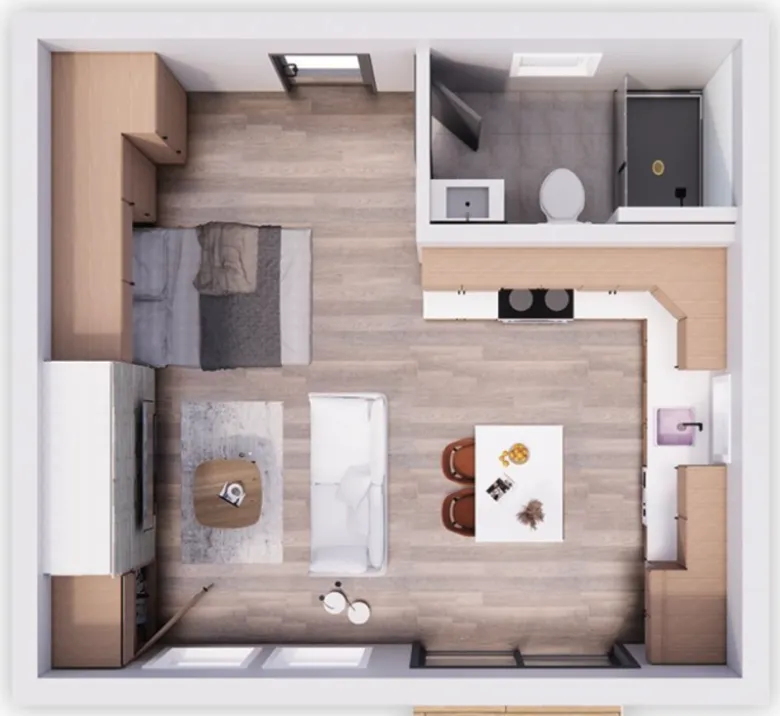
≈ $2,100–$2,600 / month fully financed
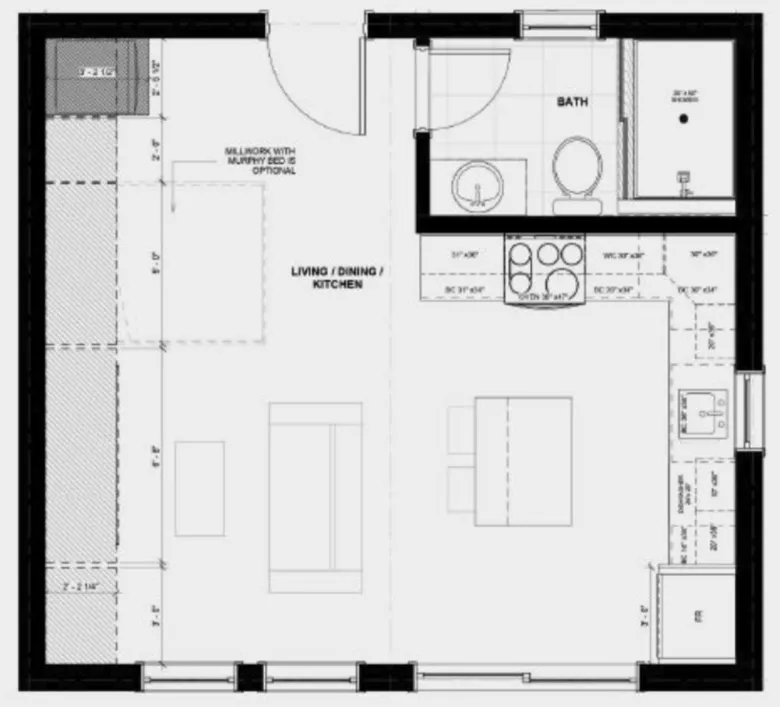
In Pueblo, the 490 fits if the main home is at least 490 sq ft
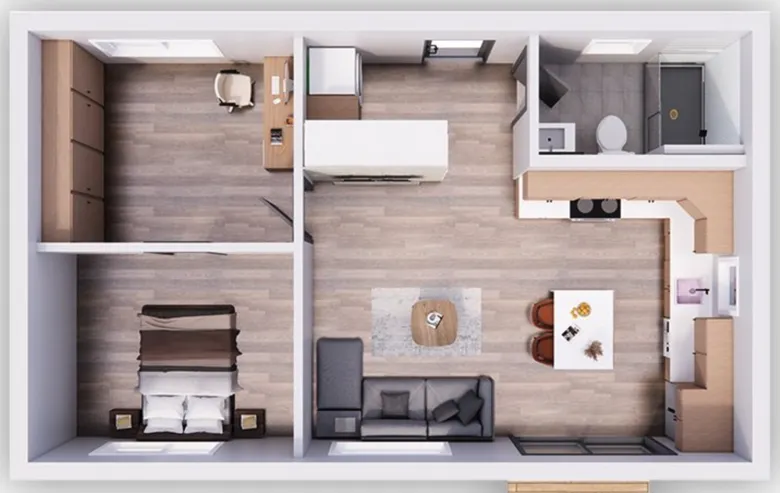
≈ $2,800–$3,500 / month fully financed
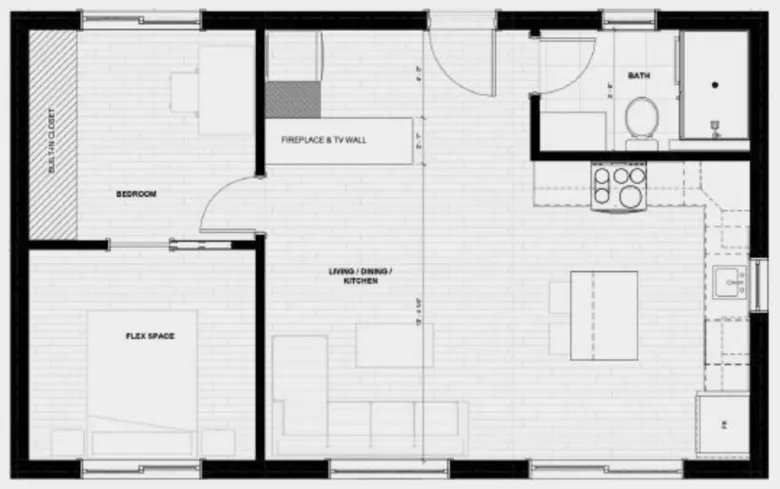
In Pueblo, the 735 fits if the main home is at least 735 sq ft
Olerra ranges: published all-in project pricing, September 2026 — site preparation, foundation, utility connections and permitting included.
Free and specific to you. Want to go further?
Yes. The Pueblo Code Of Ordinances permits accessory dwelling units (§17-4-16), subject to the size, height, setback and use rules quoted above from the ordinance text. Pueblo is also an HB24-1152 subject jurisdiction, so since June 30, 2025 state law requires it to allow an ADU wherever it allows a single-family home, with administrative approval; the local standards above still apply. Zoning district, lot size and setbacks still decide what fits on a specific lot — the free property check confirms yours.
Yes. An ADU is a new dwelling unit, so Pueblo requires a building permit (plus any zoning or site-plan review the code calls for) before construction starts. Olerra's all-in price includes permitting, and factory-built units are inspected to the same building code as a site-built home.
Per the Pueblo Code Of Ordinances: 800 sq ft or the main home's gross floor area, whichever is less. The Olerra Flex Flat 490 fits if the main home is at least 490 sq ft; the 735 fits if the main home is at least 735 sq ft. The free property check confirms what fits on your lot.
Per the ordinance: Yes, but only at time of application: owner must demonstrate occupancy of the lot when applying to build or convert an ADU (e.g., utility bill, mail, or bank statement dated within 12 months); no ongoing occupancy requirement thereafter.
A one-off site build with a general contractor typically runs about $500,000–$650,000 for a ~490 sq ft unit. Olerra's factory-built Flex Flats run $300,000–$365,000 (490) and $420,000–$465,000 (735) all-in — site preparation, foundation, utility connections and permitting included.
Roughly $639 per year for every $100,000 of value the ADU adds, in the example tax area shown above: Colorado's TY2026 school (7.05%) and local-government (6.80%) assessment rates on the latest certified (TY2025) levy, a mixed-year estimate. Levies differ between tax areas, so check your parcel with the county assessor.
Same method, each city’s own ordinance. The Colorado hub lists every city, and the statewide ADU calculator covers any Colorado address.
Guides and real Colorado numbers from our team — a fresh pick every couple of weeks, or search for exactly what you need.
How to hire an ADU contractor in Colorado, the questions to ask, the red flags to avoid, how licensing works here, and modular versus site-built compared.
Latest articles
Planning departments and journalists are welcome to reference this data.
Olerra ADU Cost Calculator — Pueblo, CO. Page updated October 9, 2026; rules verified October 2026. https://www.olerra.com/adu-calculator/pueblo/ <a href="https://www.olerra.com/adu-calculator/pueblo/">Pueblo ADU rules & costs</a> Page updated October 9, 2026. The oldest dated figure on the page is from August 25, 2026.
Planning estimates, not quotes or legal advice. Rules, fees, levies and rents change — confirm with the city and your lender before committing. Rules data: codified ordinance as of August 25, 2026, re-verified October 2026. Olerra pricing: published all-in project ranges, September 2026. Corrections: sales@olerra.com.
Built for your location and what you want to do.
We'll be in touch before then — a confirmation is on its way to your email.
Thanks — we’ll reply to your email, usually the same day.
Our team is already on it — here’s what happens next.